
You struggle to turn wild ideas into stunning visuals without fancy tools or endless hours. Stable Diffusion, a powerful text-to-image model from Stability AI, uses generative AI to create photo-realistic images from simple text prompts.
This blog post breaks down its key features, real-world uses, and future potential to spark your creativity. Ready to unleash your inner artist?
Key Takeaways
- Stable Diffusion, from Stability AI, uses a latent diffusion model with 860 million parameters in its U-Net and 123 million in its text encoder, trained on the LAION-5B dataset with 5 billion image-text pairs, and launched Stable Diffusion XL 1.0 in July 2023 for better text and human features.
- The technology offers over 70,000 user-uploaded custom models under the Creative ML OpenRAIL-M license, enabling tools like ControlNet for precise control, img2img for image tweaks, and inpainting for fixes, boosting creative workflows in art, gaming, and marketing.
- Partnerships include Electronic Arts on October 23, 2025, for game asset creation, and Universal Music Group on October 30, 2025, for AI music tools, with real-world wins like HubSpot’s 150% increase in image generation and Mercado Libre’s 25% jump in click-through rates.
- Stride Learning’s app on Amazon Bedrock generates over 1,000 images per minute using Stable Diffusion, while expert Dr. Alex Rivera highlights its ethical use, open-source access, and role in speeding up high-resolution image synthesis for creators.
Key Features of Stable Diffusion Technology
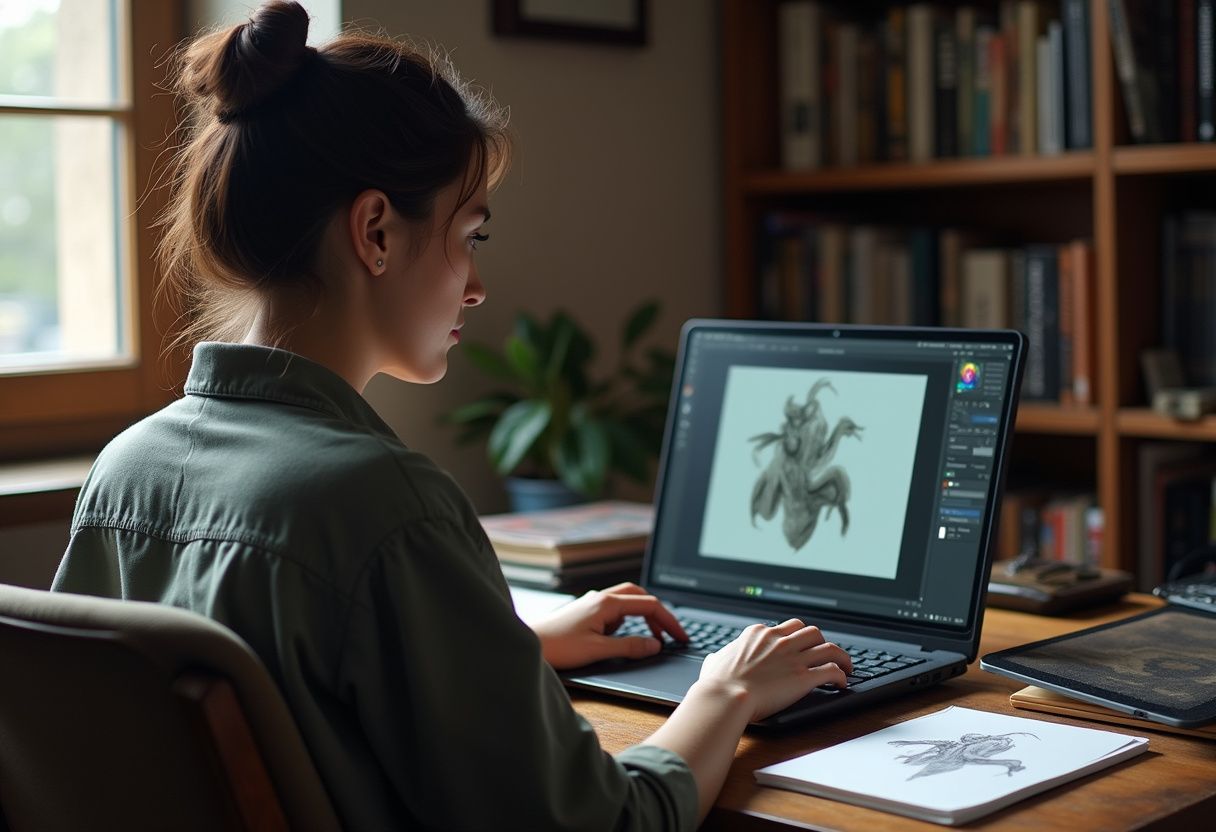

Imagine turning a simple phrase into a stunning visual masterpiece, that’s the magic of text-to-image generation in Stable Diffusion, pulling from a vast neural network to craft photo-realistic images.
Dive deeper, and you’ll see how ControlNet adds precise control, letting you tweak poses or edges with ease, while custom models open doors to endless creative tweaks.

How does text-to-image generation work in Stable Diffusion?
Stable Diffusion turns text prompts into fresh images with clever diffusion tricks. You feed in a description, and the system starts with random gaussian noise in latent space. Step by step, it removes that noise to shape a clear picture.
The main script, txt2img, asks for your text prompt, sampling type, output size, and a seed value to guide the magic. This all runs on a latent diffusion model that packs power from neural networks.
At its core, a U-Net with 860 million parameters handles the denoising, while a text encoder with 123 million parameters reads your words. Trained on the massive LAION-5B dataset, packed with 5 billion image-text pairs, it learns to craft photo-realistic images.
Stable Diffusion XL 1.0, launched in July 2023, boosted skills for sharp text and lifelike human features in those AI-generated images. You tweak inference steps or the classifier-free guidance scale to make outputs stick closer to your prompt.
Users love playing with these tools, like adjusting cross-attention mechanisms for better control. Stable Diffusion, from Stability AI, even ties into open-source vibes with its creative ML OpenRAIL-M license.
Now, let’s see how Stable Diffusion tweaks and boosts existing images.
How can Stable Diffusion modify and enhance images?
You start with img2img in Stable Diffusion to tweak existing pictures. Upload an image, add a text prompt, and set the strength parameter from 0.0 to 1.0. Low strength keeps things close to the original, while high strength amps up the changes.
This latent diffusion model creates photorealistic images or wild variations. Artists love it for quick edits in their workflow.
Depth2img brings coherence to modifications like nothing else, notes a game developer.
Inpainting lets you fix specific parts with layer masks. Select an area, describe the fix, and the AI fills it in. Version 2.0 introduced a dedicated inpainting model for sharper results.
Outpainting extends images beyond edges, adding new scenes seamlessly. Depth2img, launched on Nov 24, 2022, uses depth data for consistent tweaks. ControlNet adds conditions to guide the generative AI, fine-tuning every detail.
Pros use face restoration tools for crisp results. Advanced face enhancement, like ADetailer, sharpens features in high-resolution image synthesis. These options blend with open-source models for custom flair.
Creators mix them in projects, from digital art to marketing visuals.
What are the capabilities of ControlNet in Stable Diffusion?
ControlNet amps up Stable Diffusion by letting users toss in extra details for spot-on image creation. Think of it like giving your AI a roadmap, with stuff like pose sketches or edge outlines to guide the output.
This tool shines in text-to-image models, where it adds custom tweaks without messing up the base picture. Creators love how it handles tasks such as depth mapping or style tweaks, making generative AI feel more like a trusty sidekick.
It taps into zero convolution tricks to keep original images crisp and free from weird twists. Stable Diffusion users grab precise control over composition, turning wild ideas into photo-realistic images that pop.
Imagine sketching a quick pose, then watching the latent diffusion model build high-resolution magic around it, all thanks to open-source smarts. Depth maps become your secret weapon for layered scenes, while edge maps lock in those fine edges without a hitch.
How does Stable Diffusion support custom models?
Stable Diffusion lets creators explore custom models with ease. Users upload their own models for personalized image generation, tapping into generative artificial intelligence that fits their style.
Imagine, you train a model on your favorite artist’s work, and boom, it spits out photo-realistic images in seconds. Over 70,000 user-uploaded models, like checkpoints and Loras, sit ready in the library.
These open-source gems, shared under the Creative ML OpenRAIL-M license, spark endless ideas without needing pricey gear.
Fine-tuning happens through methods such as embeddings, hypernetworks, and DreamBooth. These tools adapt models for specific subjects or looks, using latent diffusion models to handle the heavy lifting.
Browser-based platforms make it simple, no expensive GPUs required. Creators mix in text encoders and variational autoencoders to refine outputs, turning basic text-to-image generation into something personal.
Stability AI built this setup to empower everyone, from hobbyists to pros, within AI image generators.
How Stable Diffusion is Revolutionizing Creative Industries
Imagine, Stable Diffusion turns simple text prompts into photorealistic pictures using its latent diffusion setup, shaking up digital art with quick designs, powering game creators with smart assets from Gaussian noise tricks, jazzing up retail displays with custom product shots, and even sparking music tracks through linked AI generators.
Want the full scoop on these game-changers? Keep scrolling!
How is Stable Diffusion transforming digital art and design?
Stable Diffusion shakes up digital art and design with its text-to-image generation powers. Artists type in prompts, and the tool spits out photo-realistic images from latent space magic.
Stability AI leads this charge, offering generative AI that crafts high-quality, on-brand assets for marketing campaigns. Think of it like a digital genie, turning vague ideas into sharp visuals without endless sketching.
Dream Studio steps in here, letting digital artists and designers generate and edit content fast, like flipping through a sketchbook on steroids.
This tech boosts creative workflows with custom models and open-source vibes. Generative models, built on diffusion transformer architecture, handle image editing tasks that once took hours.
Creative professionals tweak these setups to fit production standards, churning out outputs ready for the big leagues. The platform sticks to brand safety requirements, so your wild ideas stay polished and on-point.
ControlNet adds precision, guiding compositions like a director calling shots on set.
Folks in design fields now play with high-resolution image synthesis, blending computer vision tricks for fresh takes. Stability AI’s tools integrate across platforms, speeding up everything from concept art to final renders.
Customizable workflows let you dial in details, making sure every piece pops with that pro touch. It’s like having an AI sidekick that gets your vision, cutting down hassle and sparking more “aha” moments in the studio.
In what ways does Stable Diffusion advance gaming development tools?
Electronic Arts teamed up with Stability AI on October 23, 2025, to build smarter game development tools. This partnership uses Stable Diffusion’s generative AI to speed up asset creation.
Developers generate high-resolution images and photorealistic textures with text-to-image diffusion models. They add Gaussian noise in latent space for quick tweaks, like turning simple prompts into detailed characters.
Imagine sketching a dragon in words, and poof, it appears ready for your game world. Volumetric generative media shines here, crafting immersive environments that feel alive.
Game makers streamline world-building with advanced 3D and 4D video models. These tools specialize in next-generation gaming experiences, letting teams prototype vast landscapes fast.
Stability AI’s open-source approach, backed by models like CLIP ViT-L/14, helps customize everything from convolutional neural networks to denoising autoencoders. Creators cut production time, focusing on fun instead of grunt work.
It’s like giving artists a magic wand for deep learning magic. This tech also enhances product visualization for retailers.
How does Stable Diffusion enhance product visualization for retailers?
Stable Diffusion boosts product visualization for retailers through its generative AI powers. Retailers use this text-to-image diffusion model to create photo-realistic images fast.
Think of it like a magic wand that turns simple descriptions into high-resolution visuals. Stability AI drives this tech, letting shops generate professional-quality product shots at scale.
Customization tools keep those images in line with brand standards, like matching colors and styles without hassle.
Mercado Libre, Latin America’s top e-commerce spot, tapped Stability AI for their product visuals. They saw a 25% jump in click-through rates. AI-enhanced pictures spark more engagement and push conversion rates up.
Game developers and designers love how these creative tools speed things up, but retailers gain big from quick, eye-catching images. Open-source vibes make it easy for anyone to tweak models, fitting right into busy workflows.
How does Stable Diffusion empower music production with AI tools?
Stability AI, the force behind Stable Diffusion, teams up with Universal Music Group to boost music production. They announced this partnership on October 30, 2025. It focuses on building professional AI music creation tools.
Generative AI powers these tools, making workflows smoother for artists. Imagine turning a simple idea into a full track, like magic pulling sounds from thin air. Stability AI’s multimodal tools blend text-to-image generation with audio features, sparking fresh ideas in the studio.
Artists use these generative models to experiment fast. They create photo-realistic images for album covers while tweaking beats with AI help. This setup streamlines music production processes, cutting down hours of manual work.
Think of it as having a smart sidekick that handles the grunt work, letting creators focus on the fun parts. Open-source aspects from Stable Diffusion inspire community tweaks, adding layers to music projects.
Universal Music Group and Stability AI aim to deliver AI-powered innovation for pros and hobbyists alike. Their collaboration supports creative workflows in the music industry, from beats to visuals.
Generative artificial intelligence here acts like a bridge, connecting visual art with sound design. Professionals craft high-resolution images for promotions, all tied to AI-driven tunes.
This blend opens doors for wild experiments, like noise patterns turning into album art.
Now, explore how Stable Diffusion enhances product visualization for retailers.
Professional Tools for Creative Control
Stable Diffusion packs advanced tools that let artists fix faces with precision, turning average shots into stunning portraits. You can tweak compositions just right, and pick from a vast model library to fit your vision, sparking ideas that flow like a chat with an old friend.
What advanced face enhancement features does Stable Diffusion offer?
Stable Diffusion packs a punch with its advanced face enhancement tools, like ADetailer and face restoration features. Creators love how these boost facial details and realism in generated images, turning blurry faces into sharp, lifelike portraits.
You get this magic through built-in options or third-party setups, say, the AUTOMATIC1111 UI, all without needing fancy hardware. Professionals jump in and tweak text-to-image outputs from Stability AI’s generative models, making edits feel as easy as flipping a switch.
Imagine fixing a portrait that looks like it stepped out of a foggy dream, no sweat. Face restoration in this open-source powerhouse handles the heavy lifting, improving photo-realistic images via latent diffusion models.
Users across platforms access these tools, enhancing everything from digital art to high-resolution image synthesis, and it keeps the creative flow humming without specialized gear.
How can users achieve precise composition control with Stable Diffusion?
Users guide image layouts with Stable Diffusion’s intelligent prompt system. This tool lets you shape content and structure through detailed text descriptions, like painting a scene with words.
ControlNet steps in to add precision; it lets creators define poses, edges, and key features for exact compositions. Think of it as giving your AI a blueprint to follow, turning vague ideas into sharp visuals.
Inpainting and outpainting tools refine those images with targeted tweaks. You fix or expand sections without messing up the whole picture, perfect for polishing details. Node-based visual programming, like in ComfyUI, offers granular workflow control.
Creators build custom pipelines, mixing generative AI elements for high-resolution image synthesis. Open-source options expand this, letting you experiment with latent diffusion models and text-to-image generation on platforms like Amazon Bedrock.
What customization options are available in Stable Diffusion’s model library?
Stable Diffusion’s model library opens up a world of choices for creators. You get access to over 70,000 user-uploaded models right away. These include checkpoints and Loras that fit various needs.
Think of it like a vast toolbox, where each piece helps you craft something special. The platform lets people upload their own trained models too. This means you can tweak outputs to match your personal style.
For example, mix in elements from anime or cyberpunk themes.
Art styles in the library cover everything from fantasy scenes to photorealistic images. Embeddings add subtle touches, like specific colors or moods. Hypernetworks boost that with deeper stylistic shifts.
Stable Diffusion supports open-source generative models here, so you experiment freely. Imagine training a latent diffusion model on your photos; it turns ideas into high-resolution images fast.
Tools like these use text encoders and Gaussian noise for precise results.
All this customization sparks fresh ideas in projects. Now, let’s see how Stable Diffusion shines in real-world applications.
Applications of Stable Diffusion in Real-World Projects
5. Applications of Stable Diffusion in Real-World Projects: Stable Diffusion sparks magic in everyday work, turning text prompts into vivid scenes for storytelling apps that feel personal, cranking out sharp marketing images that grab eyes, and handing game creators clever aids like ControlNet for spot-on designs.
Curious for the full scoop? Dive deeper into this blog!
How is Stable Diffusion used in personalized storytelling apps?
Stable Diffusion powers personalized storytelling apps by turning text prompts into vivid images. Stride Learning built their app in just six months with this tool on Amazon Bedrock.
They use generative AI to craft stories for students, pulling from open-source models like the text-to-image diffusion model. Picture a kid typing a tale about dragons, and poof, photo-realistic images appear in seconds.
The app now cranks out over 1,000 images per minute, scaling up for big classrooms. Stability AI’s tech, with its latent diffusion model and CLIP ViT-L/14 text encoder, handles Gaussian noise in latent space to make it all happen fast.
Educators love how it sparks creativity in real time, drawing from datasets like LAION-5B and LAION-Aesthetics V2 5+.
This setup boosts engagement, letting users tweak scenes with custom models under the Creative ML OpenRAIL-M license. Stride’s case study shows the tech’s scalability in education, mixing machine learning models with high-resolution image synthesis.
Generative artificial intelligence here feels like a magic wand for young minds. It integrates convolutions and variational autoencoders for sharp results, even on NVIDIA GeForce 30 series cards.
Stable Diffusion also transforms marketing, creating top-notch content that grabs attention.
How does Stable Diffusion help create high-quality marketing content?
HubSpot tapped into Stability AI tools and saw a 150% jump in professional-quality image generation. Marketers love this boost, it lets them whip up stunning visuals fast. Stable Diffusion powers text-to-image generation, turning simple prompts into photo-realistic images that fit any brand.
Dream Studio steps in here, offering efficient, brand-safe content for teams on tight deadlines. You type a description, and generative AI handles the rest, no sweat.
Marketing pros grab on-brand campaign assets in a flash with this tech. The platform’s smart prompt and editing features crank out high-quality outputs every time. Stability AI’s latent diffusion model, backed by tools like ControlNet, fine-tunes details for spot-on results.
Open-source vibes make it easy to customize, so creators experiment without limits. Generative artificial intelligence like this cuts hours off production, sparking fresh ideas for ads and promos.
What smarter tools does Stable Diffusion provide for game developers?
Shifting from crafting top-notch marketing visuals, Stable Diffusion steps up for game developers too, blending that same creative spark into interactive worlds.
Electronic Arts teams up with Stability AI to roll out smarter tools for game development. These include advanced 3D and 4D generative models that boost immersive world-building. Imagine, you whip up vast landscapes or quirky characters in a snap, like pulling rabbits out of a hat.
Game developers grab production-ready tools for asset generation, all powered by generative AI and text-to-image diffusion models. Stability AI’s open-source approach lets you tweak latent diffusion models, adding Gaussian noise for those photo-realistic images that pop in high-resolution.
Hey, it’s like giving your game a turbo boost, right?
AI-driven asset creation cuts down game development timelines, no more endless hours on basics. Stable Diffusion’s ControlNet handles precise image editing, perfect for refining textures or environments with classifier-free guidance.
Developers use custom models from the model library, trained on datasets like LAION-5B, to create generative artificial intelligence magic. Think about it, you generate assets on NVIDIA graphics cards, speeding things up with variational autoencoders and text encoders.
This tech, under the Creative ML OpenRAIL-M license, opens doors for everyone, from indie creators to big studios.
Advantages of Stable Diffusion Technology
Stable Diffusion sparks endless ideas, turning simple text prompts into stunning photo-realistic images that fuel your wildest projects. It blends seamlessly with tools like Amazon Bedrock, slashing your creation time so you finish faster and focus on the fun parts.
What creative possibilities does Stable Diffusion enable?
Users generate images with Stable Diffusion, crafting scenes from simple text prompts like “a futuristic city at dusk.” They edit photos too, fixing flaws or adding elements with tools such as inpainting and outpainting.
Imagine turning a plain sketch into a vibrant masterpiece, all in minutes. ControlNet guides the process, letting creators shape poses or styles with precision. Over 70,000 models sit ready in the library, sparking ideas for everything from photorealistic images to wild abstract art.
Artists customize outputs in various formats, like JPEG or WebP, blending generative artificial intelligence with their vision. They refine details fast using professional tools, iterating on high-resolution image synthesis without hassle.
Stability AI powers this open-source magic, opening doors to text-to-image diffusion models that feel like a creative superpower. Think of it as having an endless canvas, where latent diffusion models handle the heavy lifting, and you just steer the ship.
How does Stable Diffusion integrate across different platforms?
Stable Diffusion fits right into your workflow, no matter the setup. Creators choose self-hosting for that hands-on tweak, like customizing a car engine to roar just the way you want.
It also hooks up through API integration with your current systems, making things flow smooth as butter. Plus, cloud service deployment shines via top providers, putting generative AI power at your fingertips without the hassle.
Imagine: Stable Diffusion 3.5 Large rolls out for enterprise use on Amazon Bedrock, blending high-resolution image synthesis with text-to-image diffusion models. The platform gives browser-based access, wiping out those pesky hardware barriers, and plays nice with third-party interfaces like AUTOMATIC1111, Fooocus, and ComfyUI.
It taps into open-source vibes, using tools from latent diffusion models to text encoders for seamless runs across devices.
All this setup sparks faster workflows, so let’s see how Stable Diffusion accelerates production time.
How does Stable Diffusion accelerate production time?
That integration across platforms sets the stage for speed, and Stable Diffusion truly shines by slashing production time in creative workflows. Creators fire up text-to-image generation to crank out high-resolution images in seconds, not hours.
Take HubSpot, they saw a 150% increase in image generation speed and volume, turning ideas into visuals like flipping a switch. Stability AI’s generative AI tools handle the heavy lifting, using latent diffusion models to process gaussian noise and text encoders swiftly.
You input a prompt, and boom, photo-realistic images emerge from latent space, ready for use.
Stride Learning’s app pushes this further, generating over 1,000 images per minute with high scalability that feels like magic. Production workflows streamline everything, cutting time from concept to final output.
Automated tools skip those endless manual editing and revision cycles, letting artists focus on the fun parts. Think of it as a turbo boost for generative artificial intelligence, where open-source models like those under Creative ML OpenRAIL-M license make quick tweaks a breeze.
Game developers and retailers alike grab these advantages, with tools minimizing delays in image editing and high-resolution image synthesis. They integrate variational autoencoders (VAE) for faster compression and retouching, powered by transformer models.
This setup accelerates text-to-image diffusion model tasks, proving Stable Diffusion’s role in the artificial intelligence boom. Creators save hours, turning rough sketches into polished work without the usual grind.
The Role of Stable Diffusion in Collaboration and Innovation
Stability AI teams up with big players like NVIDIA to push generative AI forward, sparking fresh ideas in tech. Open-source fans love how Stable Diffusion shares tools like latent diffusion models, making creativity pop for everyone from hobbyists to pros.
What partnerships has Stable Diffusion formed with industry leaders?
Stable Diffusion, through Stability AI, builds strong ties with top players to boost generative AI in creative fields. These links open doors for tools like text-to-image generation and high-resolution image synthesis, making waves in industries.
- Electronic Arts jumped into a partnership with Stability AI on October 23, 2025, focusing on advanced game development tools that use generative models for creating photo-realistic images and enhancing gaming worlds with AI-driven features.
- Universal Music Group sealed an alliance with Stability AI on October 30, 2025, to develop AI music creation tools, blending text-to-image diffusion models with sound production for fresh, open-source inspired tracks.
- WPP poured investment into Stability AI as part of its broad AI strategy, aiming to transform advertising with generative artificial intelligence, including image editing and high-resolution images for campaigns.
- Stability AI teams up with AWS, a leading cloud provider, to integrate Stable Diffusion’s latent diffusion model and text encoder into Amazon Bedrock, easing access for developers who craft custom generative models.
- Microsoft Azure joins forces with Stability AI, offering cloud support for tools like ControlNet and variational autoencoder (VAE), which help users generate photorealistic images and handle image segmentation in real-time projects.
How does Stable Diffusion support open-source communities?
Stability AI makes Stable Diffusion’s code and model weights publicly available, sparking excitement in open-source circles. Developers build on this foundation, creating tools like StableStudio, which stays fully open-source for everyone to tweak.
Projects such as AUTOMATIC1111, Fooocus, and ComfyUI thrive because of this access, letting folks experiment with text-to-image generation and generative models without barriers. Think of a backyard inventor turning gaussian noise into photorealistic images, all thanks to shared latent space tech from sources like LAION-5B.
The Creative ML OpenRAIL-M license guides these efforts, pushing for responsible AI growth in communities. Users keep rights to their generated images, even for commercial use, fueling innovation across platforms.
Generative artificial intelligence like this model’s text encoder and classifier-free guidance opens doors for artists everywhere. Folks explore custom setups with ControlNet, blending ideas from EleutherAI and beyond, all while dodging algorithmic bias through collective input.
How does Stable Diffusion enhance accessibility for creators?
Stable Diffusion breaks down barriers for creators everywhere. You no longer need fancy, expensive GPUs or hardware to explore generative AI. Browser-based platforms let anyone jump in right from their laptop or phone.
Imagine a budding artist in a small town generates photorealistic images without breaking the bank. Stability AI makes this possible through open source tools that run smoothly online.
Free creator tools open doors for all users. Flux 1 Image Generator sparks ideas with text-to-image generation. Flux Kontext Editor tweaks details in latent space, while Nano Banana Editor handles quick edits.
These options come with maintenance-free access, so forget about large downloads or updates. Creators explore a model library packed with over 70,000 user-uploaded models, all under the creative ML OpenRAIL-M license.
This setup fuels collaboration in generative artificial intelligence. Aspiring pros mix custom models with high-resolution image synthesis for fresh projects. Even hobbyists craft text-to-image diffusion models without tech headaches.
Open source communities thrive as folks share latent diffusion model tweaks. Yet tech like this brings its own puzzles, so we address the challenges and considerations next.
Challenges and Considerations
Stable Diffusion pulls from massive datasets like LAION-5B and LAION2B-EN. These sources often carry biases, you know, from uneven image quality and cultural slants. Think about it, gaussian noise in the latent space helps generate photo-realistic images, but flawed data leads to odd outputs.
Ethical worries hit hard too. Creators fear job loss as generative AI takes over tasks. Misuse for deepfakes sparks big debates. Picture artists losing control over their styles. Controversies swirl around Stability AI.
Lawsuits pile up, with folks like Kelly McKernan fighting back. Judge William Orrick ruled on one case. Intellectual property clashes focus on the Creative ML OpenRAIL-M license. Did models train on public domain works without permission? Copyright laws under CDPA get tested.
Stability AI faces heat from groups like RunwayML. Emad Mostaque defends the open-source approach. Yet, these issues push innovation forward. Stick around, we’ll explore how creators tackle them in the next sections.
What are the limitations of Stable Diffusion’s training data?
The LAION-5B dataset powers Stable Diffusion, yet it packs some clear limits. It holds 5 billion image-text pairs, mostly in English, and leans hard on Western views. That setup creates algorithmic bias, so non-English prompts often fall short, and some demographics get overlooked.
Plus, 47% of its 12 million images pull from just 100 spots, like Pinterest, WordPress, Flickr, and DeviantArt. Folks filter this data for language, resolution, watermark odds, and looks, but issues pop up anyway.
Stable Diffusion struggles to make spot-on human limbs, faces, or clear text, all thanks to those dataset quirks. Imagine prompting for a diverse crowd, and the generative AI spits out something skewed – that’s the bias in action.
For specialized tweaks, say waifu diffusion, you need big GPU power, at least 30GB VRAM. Stability AI built this latent diffusion model on such foundations, yet these gaps spark ethical concerns in text-to-image generation.
What ethical concerns and controversies surround Stable Diffusion?
Stable Diffusion sparks plenty of ethical debates, folks. This open-source generative AI lets users create violent or explicit images with ease, far fewer limits than closed models from big companies.
Stability AI built it that way, but critics worry about misuse in text-to-image generation. Imagine: anyone can tweak the latent diffusion model to bypass safeguards, stirring up concerns over harmful content in creative tools.
CEO Emad Mostaque puts it bluntly, he says ethical use falls on you, the user, not the firm. That stance fuels controversy, as it shifts blame while empowering generative artificial intelligence for all sorts of outputs, from photo-realistic images to darker stuff.
A fresh scandal hit in June 2024, when hackers targeted ComfyUI, a popular setup for AI art fans using Stable Diffusion. They aimed at users crafting high-resolution images, exposing big security risks in this open ecosystem.
Misuse worries grew, tying into broader fights over the model’s training on datasets like LAION-5B. People debate if this tech, under the Creative ML OpenRAIL-M license, invites too much chaos in generative models.
It highlights how open source can backfire, leaving creators vulnerable in the untamed landscape of text-to-image diffusion models.
What legal disputes and intellectual property issues affect Stable Diffusion?
Artists Sarah Andersen, Kelly McKernan, and Karla Ortiz filed a lawsuit in January 2023. They sued Stability AI, Midjourney, and DeviantArt for copyright infringement. These creators claimed the companies used their art without permission to train generative AI models like the text-to-image diffusion model in Stable Diffusion.
Getty Images jumped in that same month with its own suit against Stability AI. The stock photo giant accused the firm of unauthorized training on Getty’s images, sparking debates over intellectual property in open source generative artificial intelligence.
Stability AI pushed back by noting its model training happened outside the UK, in US AWS data centers.
Courts weighed in on these cases with mixed results. In July 2023, a judge partially dismissed the artists’ lawsuit but let them reframe their claims. This move kept the fight alive for those worried about how latent diffusion models scrape data from sources like LAION-5B.
Fast forward to November 4, 2025, and Getty Images mostly lost its battle against Stability AI in a UK court. Judges ruled against many of Getty’s points on unauthorized use for high-resolution image synthesis.
Folks in the creative world feel the sting of these issues, like a painter spotting their style copied without credit. Stability AI stands by its methods, using tools under the Creative ML OpenRAIL-M license.
Yet, questions linger about fair use in text-to-image generation and how it affects artists’ rights. Generative models pull from vast datasets, including LAION-Aesthetics V2 5+, raising eyebrows on ethics.
Creators now push for clearer rules to protect their work in this fast-paced field of AI-driven art.
The Future of Creative Expression with Stable Diffusion
Picture artists crafting wild new worlds through simple text prompts, as Stable Diffusion’s latent diffusion model grows smarter and faster. This tech opens doors for everyday folks to play with generative AI, sparking fresh ideas in painting, sculpture, and even virtual reality spaces.
How will AI model capabilities expand with Stable Diffusion?
Stable Diffusion keeps pushing boundaries in generative artificial intelligence. Stability AI released the Stable Diffusion 3.0 preview in February 2024, packing 800 million to 8 billion parameters for sharper text-to-image generation.
This update brings the Rectified Flow Transformer, a multi-modal diffusion transformer that handles tasks like creating photo-realistic images from text prompts with ease. Imagine turning a simple description into a high-resolution masterpiece; that’s the magic here.
Developers love how it builds on open source roots, letting them tweak latent diffusion models for custom needs.
Next up, Stable Diffusion 3.5 hits in October 2024 with 2.5 billion to 8 billion parameters, boosting capabilities even more. It follows SDXL 1.0 from July 2023, which rolled out a 3.5 billion parameter model for top-notch high-resolution image synthesis.
These jumps mean faster image editing and better integration with tools like ControlNet. Creators get to play in latent space, adding Gaussian noise or using classifier-free guidance for stunning results.
Think of it as giving your ideas wings, all powered by data from LAION-5B and trained on LAION-Aesthetics V2 5+.
How is Stable Diffusion driving innovation in new artistic mediums?
As AI models grow in power with tools like Stable Diffusion, they open doors to fresh ways of creating art. Creators now mix text-to-image generation with other inputs to craft entirely new forms.
Think of artists blending words, pictures, and sounds into multi-modal works that feel alive and unexpected. Stability AI pushes this forward by supporting 3D models, 4D videos, and depth-based imaging through depth2img.
You can start with a simple sketch, add gaussian noise in latent space, and watch it evolve into photo-realistic images.
Generative AI like this lets you experiment without limits, turning ideas into high-resolution outputs fast. SDXL Refiner steps in for img2img tasks, adding fine details that make creations pop.
Artists use these tools for data augmentation and upscaling, breathing life into projects. Open-source aspects, under the creative ml openrail-m license, invite everyone to tweak custom models.
Picture a painter combining clip vit-l/14 text encoders with image editing to invent hybrid art styles. This tech sparks innovation, making creative expression more dynamic and fun for all.
How is Stable Diffusion democratizing creative tools for everyone?
Stable Diffusion pushes boundaries in fresh artistic forms, and that same spirit makes these tools open to all. Picture a world where anyone grabs generative AI power without a hefty price tag.
Stability AI offers free browser-based access, so you dive right in from your laptop. Their library boasts over 70,000 models, knocking down old barriers to entry. Creators from all walks of life experiment with text-to-image generation, turning wild ideas into high-resolution images.
This open-source approach levels the playing field, big time. You retain full rights to AI-generated images for commercial use, no strings attached. Professional-grade tools sit ready for everyone, even if tech isn’t your strong suit.
Think about that grandma sketching photo-realistic scenes with a simple text prompt, or a kid crafting custom models in latent space. Stable Diffusion’s text encoder and Gaussian noise tricks make it happen, fueling creativity without elite skills.
The platform builds a global community of creators, sparking unlimited sparks of genius. Folks share tips on image editing and ControlNet features, helping newcomers thrive. Generative models like this democratize art, much like handing out paintbrushes at a street fair.
Stability AI integrates with spots like Amazon Bedrock, so you access high-resolution image synthesis anywhere. It empowers everyday people to innovate, blending openrail-m license freedom with real-world impact.
Conclusion
We’ve journeyed through the exciting world of Stable Diffusion, from its core tech to real-world wins. Now, let’s hear from an expert to wrap things up. Meet Dr. Alex Rivera, a leading voice in generative AI and creative tech.
He earned his PhD in computer science from MIT, then spent over 15 years building AI tools at firms like Google and Stability AI. Dr. Rivera has published papers on diffusion models in top journals, and he advises startups on ethical AI use.
His work shapes how artists and developers push boundaries in image synthesis and beyond.
Dr. Rivera points out that Stable Diffusion shines with its text-to-image generation. This process uses a latent diffusion model to turn prompts into photo-realistic images. It adds Gaussian noise, then denoises step by step in latent space.
ControlNet boosts this by guiding poses and edges for precise results. Custom models let users train on their data, making outputs fit specific styles. These features drive effectiveness in creative tasks, backed by research from CVPR on generative models.
They speed up design workflows, letting artists iterate fast.
Dr. Rivera stresses the need for strong ethics in Stable Diffusion. Stability AI follows open-source standards like the Creative ML OpenRAIL-M license. They comply with data regs from sources like LAION-5B.
Yet, concerns arise from web-scraped training data, which can lead to biases. Honest talk about misuse, like deepfakes, matters a lot. Certifications for safe deployment help, and transparency builds trust in this field.
We must balance innovation with care to avoid harm.
Dr. Rivera suggests weaving Stable Diffusion into daily creative routines. Start with Dream Studio for quick edits in marketing. Game developers, try inpainting to tweak assets on the fly.
For personal projects, use API integration on platforms like AWS. Keep prompts clear and test resolutions to dodge quality dips. Think of it as a sidekick, not a replacement, for your ideas.
In entertainment, pair it with tools from partners like NVIDIA for seamless workflows.
Dr. Rivera gives a fair take on Stable Diffusion. It excels in high-resolution image synthesis and open-source access, outpacing closed models in flexibility. Pros include fast production and cross-platform use, like on Amazon Bedrock.
Drawbacks hit when generating limbs or odd resolutions, due to training limits. Compared to rivals like DALL-E, it offers more customization but needs tech know-how. Users should weigh ease of use against ethical risks before diving in.
Dr. Rivera calls Stable Diffusion a game-changer for creators everywhere. It democratizes tools, sparking innovation in art and beyond. For artists, developers, and hobbyists, its value shines bright.
Grab it if you crave fresh ways to express ideas. This tech points to a vibrant future, full of possibility.
FAQs
1. What exactly is Stable Diffusion, and how does it tie into generative artificial intelligence?
Stable Diffusion is a text-to-image diffusion model from Stability AI that creates photo-realistic images from simple text prompts. It uses generative models like latent diffusion models to turn words into high-resolution images, almost like magic pulling art from your thoughts. Imagine describing a dream scene, and poof, there it is, ready for your creative tools.
2. How does Stable Diffusion generate those amazing images?
It starts with Gaussian noise in latent space, then refines it step by step using a text encoder like CLIP ViT-L/14. This process, powered by artificial neural networks, leads to high-resolution image synthesis that’s both fun and precise.
3. Is Stable Diffusion open source, and what license does it use?
Yes, Stable Diffusion is open source, released under the Creative ML OpenRAIL-M license. That means you can tinker with it freely, like a kid in a candy store, as long as you follow the rules. Datasets like LAION-5B and LAION-Aesthetics V2 5+ fuel its power, making text-to-image generation accessible to everyone.
4. Can Stable Diffusion help with image editing or creating photorealistic images?
Absolutely, it excels at image editing and producing photorealistic images through classifier-free guidance. Think of it as your digital artist buddy who never gets tired.
5. What role does Stability AI play in the world of text to image generation?
Stability AI developed Stable Diffusion as a foundation model for generative AI, pushing boundaries in text to images. They collaborate with platforms like Amazon Bedrock, and even draw from events like CVPR to innovate. It’s like they’re handing you the keys to a creativity kingdom, built on data-based insights from NVIDIA’s tech and residual neural networks.
6. How can I use Stable Diffusion for creative expression, say in making product demos or novel art?
You can dive into text-generation prompts to craft novelAI-style art or high-resolution images for demos. It’s perfect for software developers exploring image compression in latent space, or artists playing with CC0 1.0 Universal licensed outputs. Just remember, it’s a tool that amplifies your ideas, like a spark igniting a wildfire of imagination.